Quick answer
For UK audiences, good starting times to test are weekday mornings around 7–9am, lunchtimes around 12–1pm and evenings around 7–9pm, plus late mornings at weekends. But the best time to post is when your own followers are online, which you can see in Instagram Insights under Total followers, Most active times. Test two or three slots for two weeks and compare reach.
Why timing matters (a bit)
Instagram's feed isn't chronological, so a post doesn't vanish if you miss the perfect minute. But timing still matters. When you post, Instagram shows your content to a portion of your followers and watches how they react. If many of them are online and engaging, the post has a stronger start. If you post at 3am, the first reactions trickle in slowly.
Timing matters less for Reels, which are mostly shown to non-followers over days, and more for Feed posts and stories, which rely on your existing audience.
Good starting points for UK audiences
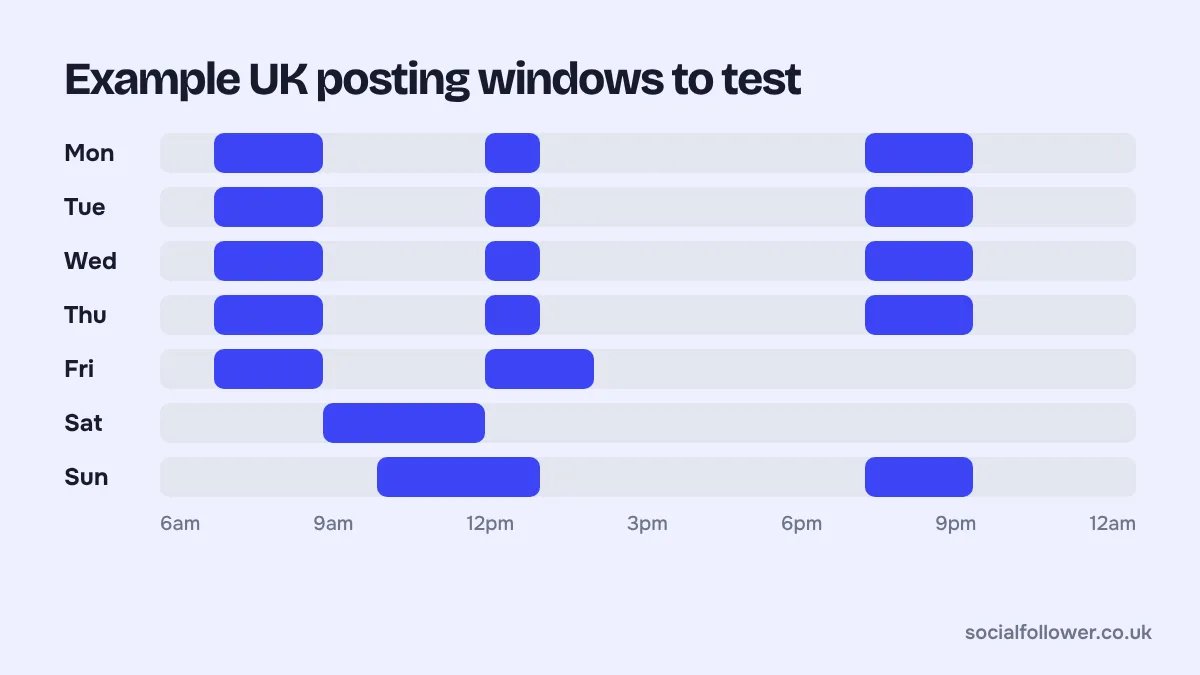
These windows follow typical UK routines. Treat them as a starting point to test, not rules.
| Day | Windows to test | Why |
|---|---|---|
| Monday–Thursday | 7–9am, 12–1pm, 7–9pm | Commutes, lunch breaks, evening wind-down |
| Friday | 7–9am, 12–2pm | Evenings are often social, so phones are used less |
| Saturday | 9am–12pm | Relaxed mornings, brunch and shopping plans |
| Sunday | 10am–1pm, 7–9pm | Slow mornings and the Sunday evening scroll |
Adjust for your audience. Students scroll later at night. Parents of young children are often online early morning and after bedtime. Hospitality workers browse mid-afternoon. B2B audiences follow office hours.
Find your own best time in Insights
- Switch to a professional (creator or business) account if you haven't already. It's free.
- Go to your profile, tap Insights (or Professional dashboard), then Total followers.
- Scroll to Most active times. You'll see your followers' activity by hour and by day.
- Pick two or three of the busiest windows.
Then run a simple test for two weeks: post similar content at different times, and compare reach and engagement at 24 hours. Keep the winners, drop the rest.
Timing for Reels, stories and Feed posts
- Feed posts and carousels: post when your followers are most active, because they get the first look.
- Reels: timing matters less, but posting when your followers are online still helps early engagement. Consistency matters more than the exact hour.
- Stories: spread them through the day. Followers who open Instagram at different times will see your latest story at the front of their bar.
Give your post the best first hour
Whatever time you post, the first hour matters. A few habits help:
- Stay online for 20–30 minutes after posting to reply to comments.
- Share the post to your story with a sticker asking people to check it out.
- Write a caption that invites a response.
- Use your five hashtags well; see our guide to the five-hashtag limit.
- For important posts, add likes or Reel views in the first hour so the post looks active to everyone who sees it.
UK-specific moments to plan around
Seasonal and national moments shift UK online behaviour: bank holiday weekends (people are out, so engagement often dips during the day), major football matches, the Great British Bake Off and other big TV evenings, Black Friday and the run-up to Christmas, and payday at the end of the month for anything you're selling. Plan launches and offers around these rather than against them.
Best times by account type
| Account | Windows worth testing |
|---|---|
| Cafés and restaurants | 7–8am for breakfast, 11am–12pm before lunch, 4–5pm for dinner plans |
| Salons, barbers and nail techs | Sunday evening and Monday morning, when people plan their week |
| Fitness coaches | 5:30–7am and 5–7pm, around workout times |
| B2B and professional services | Tuesday to Thursday, 8–9am and 12–1pm |
| Fashion and beauty creators | Weekday evenings and weekend mornings |
| Musicians | Friday mornings for release day, evenings for everything else |
These are hypotheses to test, not rules. Your Insights are the final word.
Scheduling without losing the first hour
Instagram's own scheduling tool and Meta Business Suite let you schedule Feed posts and Reels in advance, which makes posting at 7am much easier. The trade-off is that you might not be around to reply to comments in the first hour. A good compromise is to schedule for a time when you'll be able to check your phone 15–30 minutes later, and to share the post to your story when you do.
Batch your content once a week: film or shoot on one day, write captions, choose hashtags, and schedule the week. Consistency matters more than any single perfect time.
How often should you post?
Frequency matters as much as timing. For most UK accounts, a sustainable rhythm beats bursts of activity followed by silence. A realistic starting point is three to five Feed posts or Reels a week, plus stories most days. Creators chasing fast growth often post a Reel every day; small businesses can do well with three good posts a week if stories fill the gaps.
Whatever you choose, keep it steady for at least a month before judging results. Instagram, and your followers, need time to learn when to expect you.
Measuring the impact of timing
To know whether a time slot works, compare like with like. Look at reach and engagement 24 hours after posting, for posts of similar type and quality. Ignore single outliers: one viral Reel doesn't make its posting time magic. After two to four weeks, you'll see which windows consistently give your posts a stronger start.
Frequently asked questions
What is the best day to post on Instagram in the UK?
Weekdays often perform well for engagement, but it varies by audience. Check Most active times in your Insights and test.
Should I post at the same time every day?
Consistency helps your audience know when to expect you, but testing different times is how you find what works.
Does posting time matter for Reels?
Less than for Feed posts, because Reels are shown to non-followers over days. Consistency and the hook matter more.
Which time zone should I use?
UK time (GMT in winter, BST in summer), if most of your followers are in the UK. Insights shows times in your phone's time zone.